Few dishes in world cuisine evoke the same sense of luxury, craftsmanship, and theatrical table presentation as Beef Wellington. Widely regarded as one of the ultimate tests of a chef’s technical proficiency, this classic centerpiece combines tender beef fillet, savory mushroom duxelles, salty cured ham, and crisp puff pastry into a single harmonious bite. Beyond its reputation as a fine-dining spectacle, Beef Wellington represents a fascinating intersection of culinary history, balance of textures, and precise thermodynamic cooking.
The Origin and Heritage of a Legendary Classic
The history of Beef Wellington is surrounded by rich culinary lore and debate among food historians. While named after Arthur Wellesley, the First Duke of Wellington and victor of the Battle of Waterloo in 1815, historical evidence suggests the dish was not necessarily created directly for his victory celebration.
- The Patriotic Naming Era: During the nineteenth century, naming high-status dishes after prominent war heroes and noble figures was a common practice across European kitchens. Wrapping high-quality meats in pastry had long been popular in French en croûte cooking, but branding the dish as “Wellington” gave British tables an iconic national flagship.
- French Culinary Roots: The technique clearly draws inspiration from classic French Filet de Bœuf en Croûte. The key structural difference lies in the specific layering process, notably the introduction of savory duxelles and prosciutto or crêpes to act as a moisture barrier.
- Mid-Century Popularization: The dish achieved widespread global fame in the mid-twentieth century, heavily popularized in North America by Julia Child and later refined on modern television by Michelin-starred chefs who elevated it back to fine-dining stardom.
Deconstructing the Anatomy of Perfection
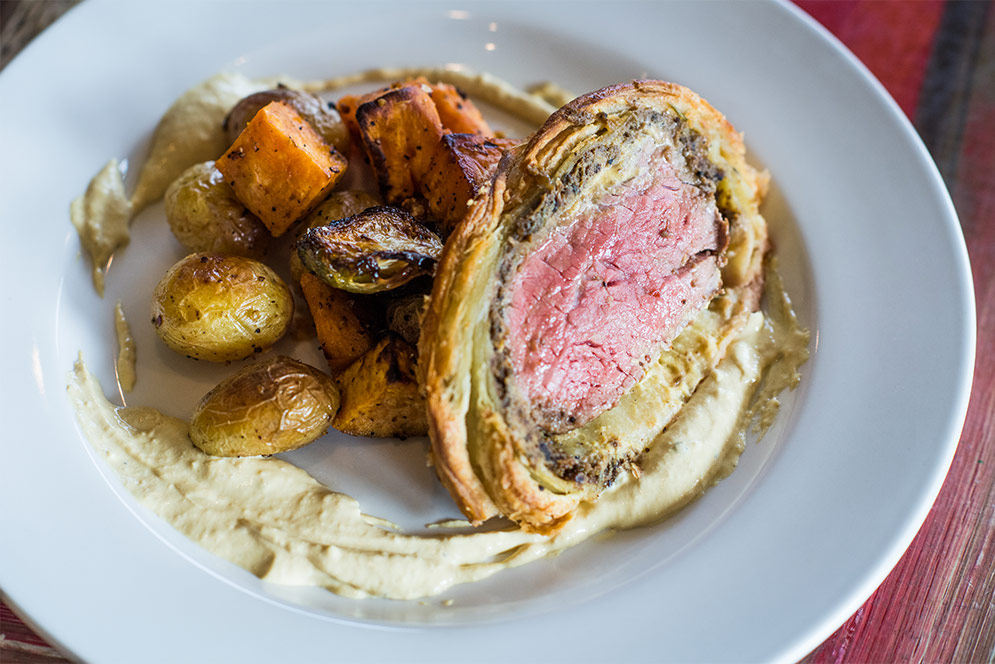
Understanding Beef Wellington requires looking at its structural layers. Each element plays a functional role in flavor creation, structural integrity, and moisture retention during the baking process.
Centerpiece: Center-Cut Beef Tenderloin
The core component is a center-cut beef tenderloin, often referred to as the filet mignon. Because this muscle does very little physical work, it yields exceptionally tender meat with a subtle, delicate flavor profile. Sear the exterior quickly at high temperatures to build a rich crust via the Maillard reaction without cooking the interior core.
Layer Two: Mushroom Duxelles and Aromatic Herbs
Surrounding the beef is a finely chopped mixture of wild mushrooms, shallots, garlic, and fresh thyme cooked down slowly in butter until all moisture evaporates. This mixture, known as duxelles, provides a concentrated, earthy umami depth that complements the mild flavor of the tenderloin.
Layer Three: The Moisture Barrier (Prosciutto and Crêpes)
One of the greatest challenges when baking meat wrapped in pastry is preventing steam from making the dough soggy. Chefs solve this by wrapping the seared tenderloin and duxelles tightly in a sheet of ultra-thin prosciutto or savory herb crêpes. This creates an impermeable seal that traps natural juices inside the beef while keeping the outer pastry shell dry.
Layer Four: Golden Puff Pastry Shell
The final outer layer is high-quality butter puff pastry. When exposed to high oven temperatures, water within the pastry layers vaporizes into steam, causing hundreds of paper-thin dough sheets to expand into a golden, flaky, and crispy golden shell.
Essential Steps to Executing an Exceptional Wellington at Home
Mastering this dish at home relies on patience, strict thermal control, and proper resting techniques rather than overly complicated tools.
- Searing and Chilling the Beef: Season the beef generously with salt and pepper, then sear every side in a hot skillet for no more than two minutes total. Immediately brush with English mustard while warm, then chill thoroughly in the refrigerator to stop the cooking process.
- Dehydrating the Duxelles: Finely blend mushrooms and cook them in a dry pan until no liquid remains. Excess moisture is the primary cause of soggy pastry and collapsed crusts.
- The Tight Wrap Technique: Lay down a sheet of plastic wrap, arrange the prosciutto in an overlapping grid, spread the cooled duxelles evenly, and place the chilled beef in the center. Use the plastic wrap to roll the assembly into a tight log, then chill for at least thirty minutes to hold its shape.
- Enclosing in Pastry: Roll out the puff pastry, brush the edges with egg wash, and wrap the chilled meat log securely, trimming any excess dough. Score the top gently for visual appeal, brush with egg yolk for a deep shine, and return to the refrigerator before baking.
- Precision Baking and Resting: Bake in a preheated oven at 200°C (400°F) until an internal meat thermometer reads 52°C (125°F) for medium-rare. Allow the Wellington to rest on a wire rack for a full fifteen to twenty minutes before slicing so the muscle fibers relax and reabsorb all interior juices.
Conclusion
Beef Wellington remains an enduring symbol of culinary mastery because it balances luxurious textures with rigorous technical execution. From its historic roots as a celebrated centerpiece to its modern status as a benchmark of fine home cooking, its appeal relies on the harmony of tender beef, rich mushrooms, and crisp pastry. By respecting the science of moisture control, chilling intervals, and precise baking temperatures, any home cook can transform simple premium ingredients into a unforgettable dining experience.