American Bacon: History, Culinary Science, and the Anatomy of Sizzle
American bacon is more than a breakfast side dish—it is a cultural phenomenon, a staple of modern gastronomy, and an iconic element of American culinary identity. Characterized by its smoky flavor, savory richness, and signature crispy texture, American-style bacon differs significantly from its international counterparts, such as British back bacon or Italian pancetta. Understanding what makes American bacon unique requires an exploration of cut selection, curing science, smoking traditions, and optimal cooking techniques.

The Cultural and Historical Origins of American Bacon
While salt-cured pork has been enjoyed across various civilizations for thousands of years, American bacon developed its distinct identity through specific agricultural practices and industrial processing in North America.
- The Colonial Era and Curing Tradition: Early European settlers brought pigs to North America, relying on heavily salted pork bellies as a reliable source of protein during long winters and journeys westward. Salt curing prevented meat from spoiling before refrigeration
 The doggie recipes beneath have been selected as a result of they’re easy to make and provide a wholesome various to store purchased treats and food. Stromboli is another dish very similar to calzone. It’s said to have been named after a popular 1950 movie starring Ingrid Bergman. Like calzone, stromboli is a type of turnover product of pizza dough and filled with numerous types of cheeses, deli meats, sausages and vegetables. Strombolis should not folded over and sealed, although. They’re as an alternative rolled. Another difference between calzone and stromboli is the sauce. Calzone is served with the marinara sauce on the aspect whereas stromboli comprises the sauce within its filling.
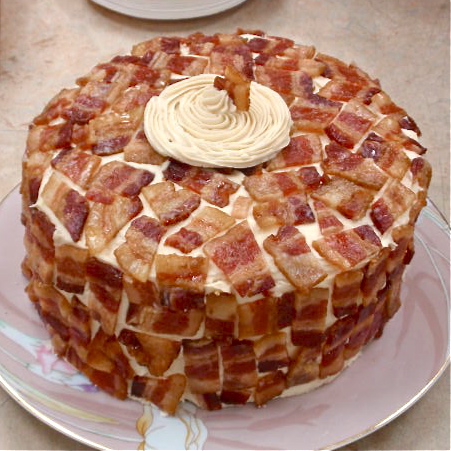 Being a qualified chef, I love meals. I personally can’t resist my pizza with mouth-watering golden crispy crust, numerous cheese and pepperoni and crispy bacon bits. One of the best factor about cooking your individual pizza is that, you’ll be able to overload it along with your favorite toppings and simply omit some elements you like to not be present in your pizza (effectively, anchovy is one for me).
.jpg/209px-Bacon_in_a_pan_(cooked).jpg) Valentine’s Day was such a mission. My recipes were impressed by a lecture I attended by Michael Ruhlman for BlogHer Meals a few years ago. Once I talked to him after the lecture and talked about my hesitation over making bacon without a smoker in my very city condominium (aka no air flow in the kitchen apart from a window on the far finish of the dining nook), he assured me that baking it off is simply as wonderful as smoking and by no means to fear the bacon. His ebook on charcuterie is implausible and one day I will indulge myself.
Valentine’s Day was such a mission. My recipes were impressed by a lecture I attended by Michael Ruhlman for BlogHer Meals a few years ago. Once I talked to him after the lecture and talked about my hesitation over making bacon without a smoker in my very city condominium (aka no air flow in the kitchen apart from a window on the far finish of the dining nook), he assured me that baking it off is simply as wonderful as smoking and by no means to fear the bacon. His ebook on charcuterie is implausible and one day I will indulge myself.